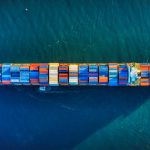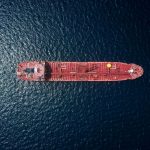


The foundation of international trade is sea freight. It is the process by which the majority of the items you purchase, such as your phone & pantry essentials, travel from the point of manufacture to the point of purchase. Knowing how international sea freight services operate is crucial if your company wants to transport goods across continents. Consider it the 24-hour highway system for global trade, humming with activity all the time. Global sea freight services are essentially businesses & procedures that make it easier for goods to be transported by ship across seas and oceans.
They take care of everything, including picking up your cargo at the point of origin and delivering it to its final destination while negotiating complicated logistics, laws, and customs. The participants in this enormous project are essential to maintaining the smooth operation of global supply chains. The foundation of global trade: the dominance of sea freight. Most likely, large container ships churning through the ocean come to mind when you think about international shipping. This is due to the fact that sea freight is by far the most common way for goods to be transported internationally.
International sea freight services play a crucial role in global trade, and understanding their dynamics is essential for businesses looking to navigate the complexities of shipping. For insights into how freight forwarders can enhance value in today’s uncertain global economy, you can read a related article that delves into this topic. Check it out here: How Freight Forwarders Add Value in an Uncertain Global Economy.
This is a question of pure efficiency & economics, not just preference. The benefits are fairly obvious for businesses, particularly those that deal with bulk commodities or large quantities of goods. Unrivaled scalability and capacity. These days, container ships are enormous.
Thousands upon thousands of shipping containers, each containing a sizable quantity of goods, can be transported by a single ship. This implies that a single shipment can transport massive amounts of goods. This scalability is crucial for producers and distributors.
Sea freight can handle loads ranging from a few pallets to enough merchandise to fill a warehouse. This capability results in immediate cost savings. The cost of transportation per unit, which has a significant impact on profit margins, is drastically decreased by moving more goods per trip. Cost-effectiveness in High Quantities.
International sea freight services are evolving rapidly, with advancements in technology playing a crucial role in shaping the future of logistics. As companies increasingly embrace digital transformation, they are finding innovative ways to enhance efficiency and reduce costs. For a deeper understanding of how these changes are impacting the industry, you can read this insightful article on the future of freight forwarding. It highlights the importance of adapting to new technologies and offers valuable perspectives on the direction of international shipping. To explore this topic further, visit this article.
To put it plainly, sea freight is typically the most economical choice if you need to move a lot of stuff. Although it takes longer than air freight, the price per kilogram or cubic meter is much less. This is particularly true for large-volume, non-urgent shipments.
International sea freight services play a crucial role in global trade, and with the increasing emphasis on sustainability, many companies are seeking ways to reduce their environmental impact. A related article discusses how sustainability is becoming a growing priority in freight forwarding, highlighting innovative practices that can be adopted by businesses. For more insights on this important topic, you can read the article on sustainability in freight forwarding here.
Consider manufacturing machinery, raw materials, or non-time-sensitive final products. Using sea freight for these kinds of goods can result in significant savings, freeing up funds that can be used for other investments. For many businesses, the cost savings outweigh the trade-off between speed & cost. environment-related factors. Shipping is generally regarded as more efficient per ton-mile than other modes of transportation like air freight or trucking, even though it still has an environmental impact.
Cleaner fuels and technologies are becoming more popular, and modern ships are becoming more fuel-efficient. Businesses are increasingly searching for sustainable shipping options as environmental regulations tighten and consumer awareness rises. Sea freight, with its inherent efficiency for large volumes, frequently fits the bill better than alternatives for long-haul movements.
Types of Sea Freight Services: Getting Around on the Water. When you choose to ship by sea, you’re making a decision about how your cargo will be handled and consolidated in addition to the mode of transportation. The kind of sea freight service you choose will depend on your budget, the volume of your goods, and their nature. Making the best logistical choice requires an understanding of these choices.
FCL stands for full container load. FCL is typically the best option if you have enough merchandise to fill an entire shipping container. You reserve a container specifically for your cargo. This has a number of benefits.
Security and Exclusiveness. Because the container is only used by you, there is typically a higher level of security and less chance of damage from other goods being shipped. During transit, no one else has access to your container.
Potentially faster transit times. FCL shipments can occasionally pass through ports more quickly, even though the ship’s voyage is the same. Compared to consolidated shipments that need sorting, the container can be loaded and unloaded more quickly because it is already packed and ready. Delivery Options Direct. FCL minimizes handling and potential delays at intermediate points by enabling direct pick-up from your supplier’s location and direct delivery to your customer’s door.
Compared to container load (LCL). Some people don’t have enough goods to fill an entire container. This is the role of LCL. In essence, you share a container with the products of other companies.
Saving Money on Smaller Shipments. This is LCL’s primary attraction. LCL is significantly less expensive than purchasing a full container if you only have a few pallets or boxes. You only have to pay for the area your cargo takes up. Hubs for consolidation and disintegration.
A freight forwarder consolidates LCL shipments at a warehouse (often referred to as a CFS, or container freight station), packs them into a container, and deconsolidates them at the port of destination. This procedure involves the cargo of other companies. Increased Management and Delay Potential.
LCL’s drawback is that your goods are handled more. At the destination, they are unloaded & sorted after being placed in a container with other shipments. Due to the consolidation & deconsolidation processes, this raises the possibility of damage and may result in longer transit times.
Expert Cargo Services. In addition to standard containerized cargo, sea freight also handles items that need special handling or don’t fit neatly into a box. cargo in bulk.
This is the term for unpackaged commodities that are transported in bulk straight into the holds of specialized ships, such as coal, petroleum, grains, or ore. It’s a huge business on its own. Project Cargo. For certain industrial projects, such as wind turbines, factory machinery, or large construction components, this is for large, heavy, or complicated equipment.
It frequently calls for heavy lifting capabilities, planning, and specialized vessels. Roll-on/roll-off shipping, or Ro-Ro. For vehicles like cars, trucks, or construction equipment, this is perfect. After being driven straight onto the ship and secured, they are driven away to their destination.
For wheeled cargo, it’s an extremely effective method. Who’s Who in Sea Freight: Players in the Game. A wide variety of businesses are involved in the sea freight industry, and each one has a distinct function to perform in transporting your goods from point A to point B.
You can navigate the process more skillfully if you are aware of these various entities. lines of shipping. These are the businesses that run and own the enormous ships. Consider corporations such as Maersk, MSC, CMA CGM, and so forth. They are in charge of the actual transatlantic transportation, route management, and ship ownership.
They typically sell space in containers on their ships. forwarders of freight. These are your logistical partners and your main point of contact.
Freight forwarders serve as a middleman between you and the shipping lines; they do not own ships. They plan the transportation, take care of paperwork, reserve space on ships, and frequently oversee different parts of the shipping procedure. knowledge and a network. A competent freight forwarder is well-versed in customs processes, international shipping laws, and the different carriers. They can find the best prices and options for your particular needs because they have relationships with several shipping lines.
In essence, they serve as your logistics department, particularly if you lack one. Services for Consolidation. Freight forwarders are essential for LCL shipments because they combine shipments from several customers into a single container.
At the destination, they oversee the deconsolidation procedure as well. Port managers & terminal operators. Ports are the busy locations where cargo is loaded & unloaded from ships. Terminal operators oversee the particular facilities & machinery used to handle containers and other cargo, while port authorities oversee the port’s general operations and infrastructure. For goods to move freely into and out of ports, they are necessary.
brokers for customs. Licensed experts with a focus on navigating the intricate world of import and export regulations are known as customs brokers. They help avoid delays and fines by ensuring that all required documentation is properly submitted to customs authorities in both the country of origin and the country of destination. Important Steps in Sea Freight: The Path of Your Goods.
The multi-stage process of shipping by sea necessitates meticulous preparation & execution. For your cargo to arrive safely and on schedule, every step is essential. Reservations and documentation.
Planning begins at this point. To reserve space on a vessel, you will collaborate with your freight forwarder. This entails giving specifics about your cargo, including its origin, destination, preferred delivery date, & any unique needs. B/L, or bill of lading.
Among the most important documents is this one. It acts as a contract of carriage, a receipt for the shipment, and a title document. It describes the shipment’s specifics, the parties involved, and the transportation conditions. Packing list and business invoice. These records contain information about the shipment’s contents, value, & packing method.
They are necessary for getting through customs. other certifications. Certificates of origin, sanitary certificates, or other specific documents may be required, depending on the kind of goods and the country of destination.
Loading and Origin Handling. Your cargo must be prepared and transported to the port after it is booked. Storage and packing (if required). Before being packed into containers, your items may be consolidated at a warehouse. This is where your goods meet other people if you’re shipping LCL. packing in containers.
When it comes to FCL, your products are either loaded and fastened inside the container on your property or at a designated stuffing station. At a CFS, the freight forwarder combines products from several customers into a single container for LCL. At the port, enter. After being transported to the port, the loaded container is “stuffed” into the shipping vessel. Ocean Travel.
Your cargo travels across the sea during this portion of the trip, which is the longest. Scheduling of vessels. You should schedule your shipment for the best possible departure and arrival dates because shipping lines have set schedules. Monitoring your shipment.
The majority of shipping companies and freight forwarders provide tools to monitor the movement of your container across the ocean. Better planning at the destination is made possible by this visibility. Customs clearance and destination handling. Your cargo goes through customs and deconsolidation when it reaches the destination port.
Port Outflow. The container is removed from the ship. For LCL, deconsolidation. If it’s an LCL shipment, each shipment is sorted & made ready for pickup after the container is opened. Customs formalities.
This phase is crucial. To guarantee that all import taxes, duties, & regulations are fulfilled, your customs broker will collaborate with the customs authorities of the destination nation. Submitting all required paperwork is part of this. Final Delivery or Warehouse? Your items can be picked up from the port or a warehouse & delivered to their final location after being cleared by customs.
Tips for Successful Sea Freight Strategy Optimization. A proactive and knowledgeable approach is essential to maximizing the benefits of international sea freight services. These useful suggestions will help your company optimize its shipping processes. Select the Correct Partner. When shipping internationally, your freight forwarder is your lifesaver. Conduct research.
Seek forwarders who have a track record of success, excellent communication, clear pricing, & experience in your industry or the areas you trade with. To compare services and prices, request quotes from several forwarders. Instead of choosing the least expensive option, think about the value & experience they offer. Recognize the Incoterms.
In international trade, Incoterms (International Commercial Terms) specify the obligations and expenses between the buyer and seller. FOB (Free On Board), CIF (Cost, Insurance, and Freight), and EXW (Ex Works) are typical Incoterms. Because it determines who is in charge of shipping, insurance, customs charges, & risk at every stage of the trip, knowing which Incoterm you’re using is essential. This clarity avoids misunderstandings & unforeseen expenses. Be Prepared & Adaptable.
Compared to other methods, sea freight is by nature slower. Your production schedules and inventory management should take this into account. Weather, port traffic, and customs problems can all cause unforeseen delays. It’s always a good idea to include a buffer period in your delivery schedules.
If at all possible, you should be flexible with your shipping dates so that you can benefit from lower prices or less crowded routes. Precise documentation cannot be compromised. One of the easiest ways to cause major delays & pay high fines is to make mistakes or omissions in your shipping documents.
Make sure the information you give your freight forwarder is correct and comprehensive. This comprises consignee information, quantities, values, and product descriptions. There is always value in double-checking. Think about cargo insurance.
Liability coverage for shipping lines is typically restricted. Purchasing cargo insurance is strongly advised for expensive goods or if you want the most peace of mind. It guards against your products being lost or damaged while in transit. Usually, your freight forwarder can set this up for you. Businesses can better plan, carry out, and optimize their international trade operations by comprehending these aspects of global sea freight services, ensuring that goods move effectively & economically throughout the world.
.




 ©2026 EXPERT CARGO INTERNATIONAL - All Rights Reserved - Powered by