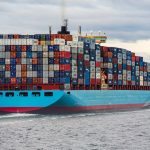


“How can I make this whole shipping thing actually work for me, without breaking the bank or my sanity?” is probably your main concern when considering freight and cargo services for your company. Fortunately, it is completely doable. Moving goods is only one aspect of efficient freight and cargo services; other goals include improving customer satisfaction, streamlining operations, & eventually increasing profits. Consider it the foundation of your business; when it is robust, everything else falls into place.
Let’s agree on what freight and cargo services truly include before we get into the specifics of efficiency. A truck pulling up at your door is only one aspect of it. Moving goods from point A to point B is the goal of this intricate ecosystem, which has many moving components.
In the ever-evolving landscape of logistics, understanding the role of freight forwarders is crucial for businesses aiming to navigate uncertainties in the global economy. A related article that delves into this topic is available at How Freight Forwarders Add Value in an Uncertain Global Economy. This piece highlights the various ways freight and cargo services can enhance supply chain efficiency and mitigate risks, providing valuable insights for companies looking to optimize their shipping strategies.
Comparing freight. Cargo: Is It Different? These terms are frequently used interchangeably, & in regular conversation, this is generally acceptable. Technically speaking, there is a slight distinction, though. Cargo: The Products themselves.
The term “cargo” describes the actual products or goods being transported. Electronics are the cargo when they are being shipped. Your cargo is any handcrafted jewelry that you ship out. The journey’s physical components are what make it. Moving cargo is the business of freight.
Conversely, the term “freight” describes the movement of these items. It is the process of transporting goods from one location to another, as well as the associated logistics. Therefore, when you hire a business to provide “freight services,” you are paying them to manage the “freight” (the process) of transporting your “cargo” (the goods). Transportation Modes: Selecting Your Path.
In the ever-evolving landscape of logistics, understanding the impact of technology on freight and cargo services is crucial for businesses aiming to stay competitive. A related article discusses how digital transformation is shaping the future of freight forwarding, highlighting innovative solutions that enhance efficiency and transparency in the industry. For more insights on this topic, you can read the article on the future of freight forwarding. Embracing these advancements can lead to significant improvements in operational performance and customer satisfaction.
How your goods will be transported is one of the most important decisions you will make. Every mode has advantages and disadvantages of its own, and the “best” option is entirely dependent on your particular requirements. The backbone of shipping is road freight. Most likely, this is what comes to mind first. Trucks are extremely adaptable & can travel to nearly any place.
In the ever-evolving landscape of logistics, sustainability has become a crucial focus for freight and cargo services. Companies are increasingly adopting eco-friendly practices to reduce their carbon footprint and enhance operational efficiency. For those interested in exploring this topic further, a related article discusses the importance of sustainability in freight forwarding and highlights innovative strategies being implemented across the industry. You can read more about it in this insightful piece on sustainability in freight forwarding here.
Advantages: Door-to-door service, flexible pickup and delivery options, reasonably quick for shorter to medium distances, and affordable in many situations. Cons: It may have an impact on the environment, fuel prices, and traffic delays. Several trucks may be needed for larger shipments. The Long-Haul Champion is Rail Freight. Trains are frequently thought of when large quantities are transported over long distances.
They work well for large quantities. Advantages: Less prone to traffic problems, very economical for large quantities, & environmentally friendly per ton-mile. Cons: May be slower than road; requires access to rail lines; frequently requires additional handling for final delivery from the rail yard. Air freight: When it’s all about speed.
Air freight is your best option if your cargo needs to be somewhere yesterday. Although it’s the fastest, it’s typically the most costly. Advantages: Excellent for high-value or perishable items; unparalleled speed & dependability for urgent shipments. Cons: Much more expensive, weight and size restrictions, and needing transportation to & from airports. Ocean Freight: The International Link.
Ships are essential for large-scale international trade. Although slow, it’s very cost-effective when used in large quantities. Advantages: More environmentally friendly per ton than air, worldwide reach, and incredibly economical for large and heavy shipments. Cons: Requires substantial port infrastructure and subsequent transportation; extremely slow transit times; vulnerable to weather delays.
The best of all worlds is intermodal shipping. In a single shipment, this entails utilizing several modes of transportation. For instance, products may be transported by truck to a rail yard, then by train to their ultimate location, and then by truck once more. Advantages: By utilizing the advantages of various modes, it maximizes cost, speed, and efficiency. Cons: May be more difficult to handle and necessitates careful coordination. After discussing the fundamentals, let’s discuss how to make this process work for you.
Finding the best option that strikes a balance between cost, speed, dependability, and your company’s goals is more important for freight efficiency than simply finding the cheapest one. First. Strategic Carrier Selection: Assembling Your Best Team. The businesses you select to manage your shipments are very important. They are partners in your supply chain, not just carriers. Recognizing the specializations and capabilities of carriers.
There are differences among freight companies. Some specialize in handling hazardous materials, oversized equipment, or temperature-controlled goods. Determine your needs: What products are you shipping?
How soon must they arrive? What are your financial limitations? Investigate possible carriers by examining their service areas, specializations, and track record. Do they have any prior experience with companies similar to yours? Ask for references by speaking with other companies that utilize their services.
How has their experience been? Getting the Best Value through Rate and Contract Negotiation. Cost is an important consideration, but don’t accept the first quote you receive. Recognize pricing structures: Weight, volume, distance, surcharges (fuel, peak season), and accessory services are just a few of the variables that can affect freight pricing.
Shop around: Request quotes for the same shipment from several carriers. Leverage your volume: You have more power to bargain for lower prices if your shipping requirements are regular. Long-term agreements may also provide stability and more favorable rates.
Make sure the contract specifies services, transit times, liability, & any particular requirements you may have. This will help you be clear about what you expect. The Power of Partnership: Creating Long-Term Connections.
It is frequently more effective to stick with one or two trustworthy carriers rather than switching frequently. Loyalty can be rewarded: Carriers frequently give regular customers preferential treatment & better service. Deeper comprehension: A long-term partner will learn more about your company, your goods, and your usual shipping procedures, which will result in fewer mistakes and more efficient operations. Proactive problem-solving: A solid rapport increases the likelihood that the carrier will go above & beyond to promptly address problems as they come up. Two.
The cornerstone of efficiency is optimizing your loading & packaging. Just as crucial as the mode of transportation itself is how you prepare your goods for transportation. Damage, delays, and higher expenses can result from subpar packaging. Packaging that is safe & insured will safeguard your investment. This is about making sure your products arrive in the same condition they left, not just about preventing dents.
Select the proper supplies: Make use of sturdy boxes, packing peanuts, foam, bubble wrap, & strong packing tape. Think about the trip: Will your cargo be loaded by a forklift, handled by hand, or stacked by machines? Your packaging must be resilient to these stresses. Avoid overpacking or underpacking: Underpacked boxes don’t provide much protection, while overpacked ones can burst. Weight distribution: To avoid the box becoming unbalanced and falling, make sure the weight is distributed evenly throughout.
Palletization and loading strategies that maximize space and minimize damage. Pallet arrangement has a big impact on handling effectiveness and transportation expenses. Techniques for stacking: Discover how to safely stack boxes on pallets and interlock them to form a sturdy unit.
Steer clear of overhangs. Securing the load: To keep the cargo securely in place on the pallet, use strapping or stretch wrap. By doing this, shifting during transit is avoided. Pallets should be loaded and unloaded with forklifts properly to prevent dropping or damaging the cargo.
Optimizing trailer space: Well-loaded pallets & boxes can drastically cut down on the number of trips required, saving both money and time. Clarity is essential when it comes to labeling and documentation. Confusion & misplaced shipments are avoided with precise and unambiguous labeling. Verify the accuracy of all shipping and return addresses.
Clear identification: Make use of labels with tracking numbers, shipment information, & any special handling guidelines. Important paperwork: Make sure the carrier has all the paperwork they need, including bills of lading, invoices, and customs forms for shipments abroad. Third. utilizing technology to increase control and visibility.
Nowadays, when it comes to handling freight, technology is your best friend. You can gain from it without being an expert in technology. Knowing Where Your Goods Are: Tracking and Tracing.
Possibly the most basic technological benefit is this. Real-time updates: You can track your shipments in real time with the majority of carriers’ online portals and apps. This enables more proactive problem-solving and improved planning. Proactive alerts: Configure alerts for important events, like arrival, departure, or possible delays. Communication with customers: Let them know when to expect their orders by providing them with tracking information.
Customers are happier as a result, & fewer people ask “where is my order?”. TMSs, or transportation management systems, simplify operations. A TMS can be revolutionary for companies that ship large quantities of goods. Centralized platform: A TMS enables you to handle all of your shipping-related tasks from a single location, including scheduling shipments, obtaining quotes, and monitoring and evaluating results. Carrier integration: By directly integrating with the carriers of your choice, a number of TMS platforms can automate numerous manual procedures.
Route optimization: By taking into account variables like distance, traffic, and delivery windows, advanced TMS can assist in determining the most effective routes. Analyze and report data to learn more about your shipping expenses, carrier performance, and possible areas for improvement. Warehouse Management Systems (WMS): Linking Inventory and Shipping. Your freight management & WMS can work together seamlessly if you have a warehouse.
Inventory accuracy: Planning shipments and preventing stockouts depend on accurate inventory levels, which a WMS guarantees. Order fulfillment speed: An effective WMS can expedite the picking, packing, and shipping procedures, cutting down on the amount of time that items must wait to be shipped. Real-time data flow: WMS can automatically produce shipping labels and manifest for outgoing orders when it is integrated with freight systems.
Forty. Supply Chain Cooperation: Cooperation Is Better. Consider your suppliers, customers, and freight providers as components of a larger, interconnected system rather than as distinct entities.
Information sharing is the cornerstone of trust. For operations to run smoothly, open communication is essential. Share forecasts: Give your carriers accurate estimates of the volume of shipments you plan to make.
They are better able to plan and allocate resources as a result. Communicate changes quickly: Let your carriers know as soon as possible if your order volumes change or if you have any special requests. Feedback loop: Provide both positive and negative feedback to your carriers. This improves their offerings and fortifies your bond. Integrated Planning: coordinating actions.
There can be notable efficiencies when everyone is in agreement. Analyze performance together: Examine shipping data on a regular basis with your major carriers to find patterns & areas that could be optimized. Talk about impending difficulties: Talk about the logistics with your freight partners well in advance if you expect a seasonal surge or the introduction of a new product. Collaborative problem-solving: Instead of merely lamenting an issue, collaborate with your employer to resolve it.
They frequently possess important knowledge and insights. Developing a Robust Supply Chain: Being Ready for Any Eventuality. The world can be unpredictable. A robust supply chain is able to withstand them.
Distribute your shipments among a variety of carriers and routes. In times of disruption, having alternatives can be very important. Contingency plans: Create backup plans for typical disruptions like strikes, natural disasters, or port congestion. Frequent risk assessments: Look for possible weaknesses in your supply chain and take proactive measures to fix them. Five. Continuous Improvement: The Endless Path to Effectiveness.
Efficiency is a continuous process of assessment and improvement, not a one-time solution. KPIs & performance metrics: Measuring what counts. If you don’t measure, you can’t improve.
Determine what constitutes success for your freight operations using key performance indicators (KPIs). These are typical KPIs. The proportion of shipments that arrive by the scheduled date is known as the “on-time delivery rate.”.
Cost per shipment is calculated by dividing the total cost by the quantity of shipments. The percentage of shipments that arrive damaged is called the damage rate. The degree to which actual & estimated transit times coincide is known as transit time accuracy. Reliability, communication, & problem-solving are the basis for carrier performance scores. Frequent review: Arrange for your team to go over these metrics on a regular basis. Identifying Savings through Cost Analysis and Reduction.
Examining expenses on a regular basis can reveal hidden savings. Recognize your total landed cost, which includes duties, taxes, insurance, & any other costs related to transporting the goods to their destination in addition to the freight cost. Determine cost drivers by examining the expenditures you have made. Are some carriers or routes always more costly than others? Question presumptions: Could backhauling or consolidation lower costs?
Are you utilizing the most economical mode of transportation for each link in your supply chain? Feedback loops & process modifications: evolving and adapting. Pay attention to your employees, carriers, and clients.
Internal feedback: Encourage your customer service agents, sales team, and warehouse employees to report any problems or recommend shipping-related enhancements. Their insights are often the most direct. Feedback from carriers: Make a conscious effort to get their opinions. They are aware of the difficulties on their end & can frequently offer insightful advice.
Customer insights: What are your customers saying about packaging, delivery schedules, or any other shipping-related problems? Their input is very helpful in pinpointing problems. Pilot new approaches: Before making a full commitment, don’t be scared to test new tactics, technologies, or carriers on a small scale. You can turn your freight & cargo services from a possible headache into a potent engine for your company’s success by concentrating on these principles: comprehending the fundamentals, choosing the right partners, carefully preparing your goods, embracing technology, encouraging collaboration, and making a commitment to continuous improvement.
It’s about making wise decisions, forming solid bonds with others, & constantly searching for methods to do things a little bit better.
.




 ©2026 EXPERT CARGO INTERNATIONAL - All Rights Reserved - Powered by