

Getting your freight from the UK to Romania smoothly and economically is definitely achievable, and it hinges on making smart choices about your transport method, route, and partners. The short answer? Road freight is often your most practical bet for most cargo, offering a good balance of speed and cost, with rail and sea freight offering alternatives for specific needs. Air freight is an option for urgent, high-value goods, but it comes at a significant premium.
Deciding how your goods will travel is the first big puzzle piece. Each method has its own strengths and weaknesses depending on what you’re shipping, how fast it needs to get there, and your budget.
Road Freight: The Workhorse for UK-Romania
For most businesses sending goods between the UK and Romania, road freight is the go-to. It offers a good blend of flexibility, cost-effectiveness, and decent transit times.
Full Truck Load (FTL) Explained
If you have enough goods to fill an entire truck, FTL is probably your best bet. You get a dedicated vehicle, meaning faster transit times as there are no other stops for unrelated cargo. It also generally reduces the risk of damage because your goods aren’t being handled multiple times or sharing space with other shipments. It’s often more economical per unit for larger volumes. Think about it: once the truck is loaded in the UK, it’s heading straight to your destination in Romania (barring necessary customs checks and driver breaks).
Less Than Truck Load (LTL) for Smaller Shipments
Don’t have enough to fill a whole truck? LTL, or groupage, is your answer. Your goods share space with other shipments heading in the same general direction. This makes it a much more cost-effective option for smaller volumes, as you only pay for the space your cargo occupies. The downside? Transit times can be a bit longer because the truck makes multiple stops for collections and deliveries. There’s also a slightly higher chance of handling during the process as goods are consolidated and deconsolidated at various hubs. It requires careful planning by your freight forwarder to ensure efficient routes and minimise delays.
Benefits of Road Freight for this Route
- Door-to-Door Service: Trucks can pick up directly from your UK location and deliver right to your consignee in Romania, offering unmatched convenience.
- Flexibility: Greater routing options compared to fixed rail or sea routes.
- Cost-Effective: Often the most economical choice for many types of cargo, especially for mid-range volumes.
- Established Network: A well-developed network of hauliers and freight forwarders operates on this busy European route.
Rail Freight: An Increasingly Viable Alternative
While not as common for direct UK-Romania as road, rail freight is gaining traction, especially for longer distances within Europe and as part of intermodal solutions.
The Intermodal Advantage
For the UK to Romania, rail freight often works best as part of an intermodal solution. This typically involves using road transport for the initial and final legs (to and from the rail terminals) and rail for the long haul across continental Europe. You get the environmental benefits of rail combined with the flexibility of road.
Who Benefits Most from Rail?
- Bulk Goods: Ideal for heavy or bulky goods that are less time-sensitive.
- Environmentally Conscious Shippers: Rail generally has a lower carbon footprint per tonne-kilometre than road.
- Cost Savings for Volume: Can be very competitive for larger, regular shipments, especially mitigating some of the fuel surcharge volatility seen in road transport.
Sea Freight: For Large, Less Urgent Shipments
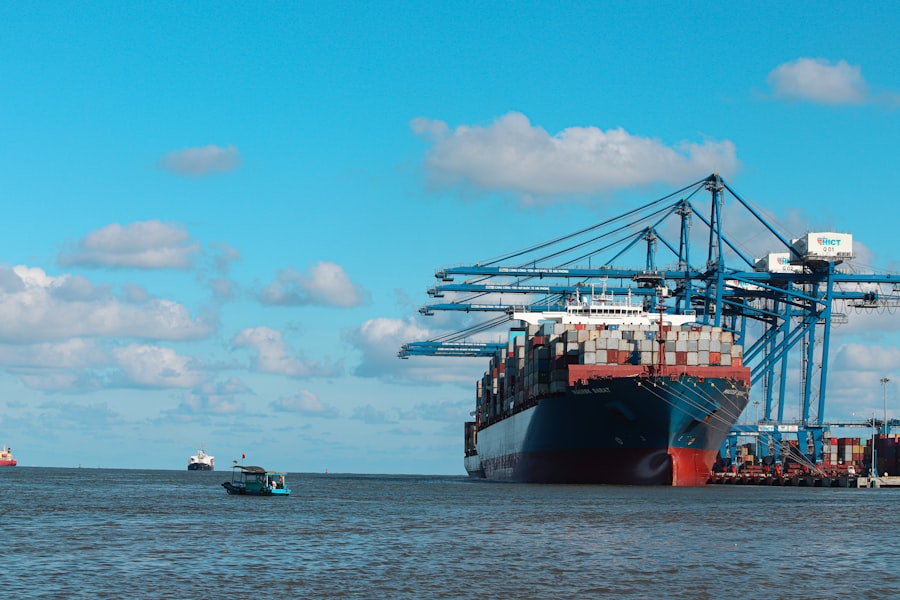
If you’ve got a lot of goods, or very heavy items, and time isn’t of the essence, sea freight is usually the cheapest option. However, for a UK-Romania route, it involves additional handling and potentially longer overall transit times.
Container Options: FCL and LCL
- Full Container Load (FCL): Like FTL for road, if you have enough goods to fill an entire 20ft or 40ft container, FCL is efficient. Your container is sealed at origin and only opened at destination, generally reducing handling.
- Less than Container Load (LCL): For smaller shipments, your goods share space in a container with other shipments. Similar to LTL for road, it’s cost-effective but can involve more handling and potentially longer transit times due to consolidation and deconsolidation.
Drawbacks for UK-Romania
- Longer Transit Times: Significantly longer than road or air, as it involves port-to-port travel, and then further road or rail transport from the Romanian port (typically Constanța) to your final destination.
- More Handling: Involves multiple transhipments – loading onto a vessel, offloading, then loading onto road/rail for onward delivery. This increases the risk of damage if not properly managed.
- Indirect Routes: You’d likely ship from a UK port (e.g., Felixstowe, Southampton) to a major European hub, then onward to Constanța, or directly to Constanța via the North Sea and connecting inland waterways or direct sea routes.
Air Freight: When Speed is Paramount
When your shipment absolutely has to be there yesterday, air freight is the undisputed champion of speed.
When to Choose Air Freight
- Urgent Shipments: Perishables, high-value electronics, critical spare parts, or time-sensitive documents.
- High Value, Low Volume: Where the cost of transport is a small percentage of the goods’ value.
- Emergency Situations: Unforeseen demands or production line stoppages.
The Financial Trade-off
Unsurprisingly, speed comes at a cost. Air freight is significantly more expensive than road, rail, or sea. You’re paying for rapid transit, high security at airports, and often express customs clearance. It’s a strategic choice for businesses where the cost of delay far outweighs the higher shipping cost.
When considering the logistics of freight transport from the UK to Romania, it’s essential to understand the role of freight forwarders in navigating the complexities of international shipping. A related article that delves into this topic is available at How Freight Forwarders Add Value in an Uncertain Global Economy. This resource highlights how these professionals can enhance efficiency and reliability in the supply chain, particularly in the context of fluctuating market conditions.
Navigating Post-Brexit Realities
The landscape for freight between the UK and the EU changed significantly after Brexit. Ignoring these changes will lead to delays and unexpected costs.
Customs Documentation and Procedures
This is probably the biggest post-Brexit hurdle. What used to be a seamless process now requires proper documentation and adherence to customs regulations.
Key Documents You’ll Need
- Commercial Invoice: Essential. This details the buyer, seller, goods description, value, currency, Incoterms, and origin. Accuracy is paramount.
- Packing List: Describes what’s in each package: number of items, weights, dimensions. Crucial for customs and handling.
- Certificates of Origin: May be required for certain goods to qualify for preferential tariffs under the UK-EU Trade and Cooperation Agreement. If you don’t provide this, duties may apply.
- Export/Import Licences: Required for controlled goods (e.g., certain chemicals, dual-use items, military goods).
- CMR Waybill (for road freight): The contract of carriage for international road transport.
- Bill of Lading (for sea freight) / Air Waybill (for air freight): The contract between the shipper and carrier.
EORI Numbers: Non-Negotiable
Both your UK business and your Romanian consignee will need an EORI (Economic Operators Registration and Identification) number. Without these, your goods simply won’t clear customs. Your freight forwarder can’t process your shipment without them.
Duties and Tariffs
While the UK-EU Trade and Cooperation Agreement allows for tariff-free trade on goods originating in the UK or EU, provided they meet the rules of origin, missteps here can result in duties being applied. Be absolutely clear on the origin of your goods. If you’re reselling goods that originated outside the UK or EU, they may be subject to tariffs.
VAT Implications
VAT rules are complex. Generally, goods exported from the UK are zero-rated for UK VAT. However, Romanian import VAT will be due, often paid by the importer of record. Understanding who is responsible for paying VAT and duties (as defined by your Incoterms) is critical to avoid disputes and delays.
Understanding Incoterms®
Incoterms (International Commercial Terms) are a set of globally recognised rules published by the International Chamber of Commerce (ICC). They define the responsibilities of buyers and sellers for the delivery of goods under sales contracts. Using the wrong Incoterm can lead to expensive misunderstandings.
Why Incoterms Matter
They clarify who is responsible for:
- The cost of transport.
- Insurance.
- Customs clearance procedures (export and import).
- Risk (when the risk of loss or damage transfers from seller to buyer).
Common Incoterms for UK-Romania
- EXW (Ex Works): The seller makes the goods available at their own premises. The buyer bears all costs and risks of moving the goods from there to their final destination. Least responsibility for the seller. Not generally recommended for international shipping from the perspective of the buyer, as they are fully responsible for UK export customs, which they may not be equipped to handle.
- FOB (Free on Board): (Used for sea or inland waterway transport only). The seller delivers the goods on board the vessel nominated by the buyer at the named port of shipment. Risk transfers when goods are on board.
- CIF (Cost, Insurance & Freight): (Used for sea or inland waterway transport only). The seller pays for costs and freight to bring the goods to the named port of destination. The seller also procures marine insurance against the buyer’s risk of loss or damage during transit.
- CFR (Cost & Freight): (Used for sea or inland waterway transport only). Similar to CIF but without the seller procuring insurance.
- FCA (Free Carrier): The seller delivers the goods, cleared for export, to the carrier nominated by the buyer at a named place. A versatile term suitable for any transport mode, often used for LCL/LTL.
- CPT (Carriage Paid To): The seller pays for the carriage of the goods to the named place of destination. Risk transfers to the buyer upon handover to the first carrier.
- CIP (Carriage and Insurance Paid To): Similar to CPT, but the seller also pays for insurance against the buyer’s risk of loss or damage during transit. Useful for high-value goods.
- DAP (Delivered at Place): The seller delivers the goods to the buyer’s nominated place of destination, ready for unloading, but not unloaded. The buyer handles import customs clearance and pays duties/taxes. A very common and practical term.
- DDP (Delivered Duty Paid): The seller delivers the goods, cleared for import, and ready for unloading at the named place of destination. The seller bears all costs and risks, including customs duties and taxes. Most responsibility for the seller. This is often desired by buyers but requires the seller to have a clear understanding of Romanian import procedures and taxation, which can be challenging without local representation or a good agent.
Choosing the right Incoterm impacts your pricing, insurance, and administrative burden. Discuss this with your freight forwarder to ensure alignment with your commercial agreements.
Partnering with a Reliable Freight Forwarder
Trying to manage international freight from scratch, especially post-Brexit, can be a headache. A good freight forwarder is invaluable.
What a Freight Forwarder Does for You
Think of them as your logistics architect. They don’t own the trucks, ships, or planes, but they manage the entire process.
- Route Planning: They’ll figure out the most efficient and cost-effective way to get your goods from A to B.
- Carrier Selection: They have relationships with various carriers (trucking companies, airlines, shipping lines) and can negotiate better rates than you might get directly.
- Documentation Management: This is where they really shine post-Brexit. They handle customs declarations, prepare necessary paperwork, and ensure compliance.
- Customs Clearance: They either have in-house customs brokers or work closely with them to ensure your goods clear both UK export and Romanian import customs smoothly.
- Consolidation/Deconsolidation: For LTL/LCL shipments, they manage the grouping and breaking down of cargo.
- Warehousing & Storage: Many offer temporary storage solutions if needed at either end.
- Tracking & Communication: They provide updates on your shipment’s status and communicate any potential issues.
- Troubleshooting: If delays or problems arise (and sometimes they do), a good forwarder is proactive in resolving them.
What to Look for in a Freight Forwarder
- Experience on the UK-Romania Route: This is paramount. They should have a proven track record specifically for this corridor and understand the nuances of Brexit-related customs.
- Customs Expertise: Ask about their customs brokerage capabilities, either in-house or via partners. This is crucial.
- Communication: Are they responsive? Do they provide clear, timely updates?
- Network: Do they have reliable partners in Romania for last-mile delivery and local assistance?
- Insurance Options: Can they advise on and arrange cargo insurance?
- References: Don’t be afraid to ask for testimonials or references from other clients shipping to Romania.
- Technology: Do they offer online tracking or easy ways to submit documentation?
Also visit our Facebook page.
Optimising Your Shipments for Efficiency
Beyond choosing the right method and partner, there are practical steps you can take to make your shipments more efficient.
Proper Packaging and Palletisation
This is often overlooked but critical for both safety and cost.
Protecting Your Goods
- Robust Packaging: Use sturdy cartons or crates suitable for the weight and nature of your goods. Consider vibration absorption, cushioning, and internal supports.
- Weather Protection: If your goods are sensitive to moisture, ensure they are wrapped or packed in waterproof materials. Even in an enclosed truck, condensation can occur.
- Security: Seal packages properly to prevent tampering or accidental opening.
Maximising Space (and Minimising Cost)
- Stackable Solutions: Design packaging to be easily stackable without collapsing.
- Uniformity: If possible, use standard-sized boxes that can be efficiently arranged on pallets.
- Palletisation Best Practices:
- Use good quality pallets in standard sizes (e.g., Euro pallets 120cm x 80cm) if your consignee can handle them.
- Distribute weight evenly across the pallet.
- Don’t let goods overhang the pallet edges, as this makes them prone to damage and difficult to store.
- Shrink wrap or strap your goods securely to the pallet to prevent shifting during transit.
- Label each pallet clearly with destination address, contact details, and any handling instructions (e.g., “Fragile,” “This Way Up”).
Accurate Dimensions and Weight
Quoting will be inaccurate and potentially lead to re-billing (often at a higher rate) if you provide incorrect details.
Why Accuracy Matters
- Rate Calculation: Freight rates are based on either actual weight or volumetric weight (the space your cargo takes up), whichever is greater. Inaccurate figures mean inaccurate quotes.
- Vehicle Capacity: An
*
overestimate could mean paying for space you don’t use; an underestimate could lead to a truck being overloaded or unable to fit all cargo, causing delays and additional charges.
- Customs Declarations: Customs documents must match the physical goods. Discrepancies can lead to inspections, delays, and fines.
How to Measure
- Gross Weight: The weight of the goods plus all packaging.
- Volume: Measure the length, width, and height of each package/pallet accurately.
- Volumetric Weight Calculation: Your freight forwarder will use a specific formula (e.g., L x W x H in cm / 5000 or 6000 for air freight, different factors for road/sea) to determine the chargeable weight. Be aware of this.
Clear Labeling and Documentation
This sounds obvious, but missed details here cause unnecessary hold-ups.
Essential Labeling Information
- Shipper and Consignee Addresses: Full details, including company name, contact person, phone number, and email.
- Tracking Number: Provided by your forwarder/carrier.
- Number of Pieces: E.g., “1 of 5,” “2 of 5,” etc.
- Weight and Dimensions: On each package/pallet.
- Handling Instructions: Stackable, fragile, keep dry, temperature-sensitive, etc.
- Hazardous Materials: If applicable, correct DG (Dangerous Goods) labels are legally required.
Accessible Documentation
Ensure all required documents (commercial invoice, packing list, customs declarations) are readily available, both electronically and ideally a physical copy attached clearly to one of the packages (e.g., in a “documents enclosed” wallet). This speed up customs processing.
When considering the complexities of freight transport from the UK to Romania, it’s essential to understand the growing importance of sustainability in the logistics sector. A related article discusses how companies are increasingly prioritizing eco-friendly practices in their operations. For more insights on this topic, you can read about it in the article on sustainability in freight forwarding, which highlights the evolving strategies that are shaping the future of transportation. To explore this further, visit sustainability in freight forwarding.
Considering the Destination: Romania Specifics
Understanding the Romanian context can give you an edge.
Key Entry Points and Logistics Hubs
While trucks can deliver across Romania, understanding common major hubs can be useful, especially for LTL or onward distribution.
- Bucharest: The capital, and by far the largest economic centre. Numerous logistics parks and distribution centres are located here or close by (e.g., around Buftea, Chitila, Bolintin-Deal).
- Constanța: Romania’s largest port on the Black Sea. Important for sea freight and as a gateway for goods entering or leaving the wider region.
- Cluj-Napoca, Timișoara, Iași, Brașov: Other major cities with significant industrial activity and good transport links, serving as regional distribution points.
Your forwarder will usually have direct routes or established consolidation points to these destinations.
Local Delivery Considerations
- Road Quality: While major highways are generally good in Romania, secondary roads can vary in quality, especially in rural areas. This can impact transit times for final-mile delivery.
- Delivery Vehicle Access: Confirm if the recipient’s premises can handle standard HGVs. Is there adequate turning space? Is a tail-lift needed? Are there time restrictions for deliveries?
- Working Hours: Be aware of local business hours for deliveries to avoid trucks waiting unnecessarily.
Cultural and Language Factors
While English is widely spoken in business circles, having key documents translated into Romanian or ensuring your forwarder has local contacts who can communicate effectively can iron out potential misunderstandities. Especially for things like delivery instructions or specific recipient requirements.
For those interested in the evolving landscape of freight transport from the UK to Romania, it is essential to consider the impact of digital transformation on logistics. A related article discusses how embracing technology can enhance efficiency and streamline operations in the freight forwarding industry. You can read more about this topic in the article on the future of freight forwarding. Understanding these advancements can provide valuable insights for businesses looking to optimize their supply chains across borders.
Wrapping It Up: Your Next Steps
Efficient freight transport from the UK to Romania is a systematic process. It’s not just about finding the cheapest option, but the most effective one for your specific needs. Here’s a quick recap of your practical toolkit:
- Define Your Needs: What are you shipping? How urgent is it? What’s your budget?
- Choose Your Method: Road for most, rail for intermodal/bulk, sea for large/non-urgent, air for urgent/high-value.
- Master Post-Brexit Rules: EORI numbers, accurate documentation, Incoterms, and understanding duties/VAT are non-negotiable.
- Partner Wisely: A freight forwarder with specific UK-Romania and Brexit experience is your best asset.
- Optimise Internally: Package smart, measure accurately, and label clearly.
By taking a structured approach and working with experienced professionals, you can ensure your goods move efficiently and reliably from the UK to Romania, helping your business thrive in the process.




 ©2026 EXPERT CARGO INTERNATIONAL - All Rights Reserved - Powered by